A tabletop roleplaying game set in the war-torn world of Scars of Honor, powered by the Torches in the Dark conflict engine. Choose your faction, forge your story, and earn your scars at the table.
This is an unofficial, fan-made TTRPG created for personal and community use, powered by the Torches in the Dark conflict engine. Scars of Honor is developed by Beast Burst Entertainment. All original lore, races, and world elements belong to their respective creators.
Navigate to the section you need. Every rule you require to run Chronicles of Aragon — powered by the Torches in the Dark conflict engine.
A world forged by divine war, shattered by cataclysm, and held together by the scars of those who survived.
The world of Aragon is defined by a cosmic dualism — a perpetual war between the Gods of Order and the primordial forces of Chaos. This is no abstract theology. It is a tangible, geographical, and biological reality that shapes every race, nation, and blade on the continent.
Fatigued by their own celestial warfare, the Old Gods established a proxy conflict, forging mortal races to act as their champions on the material plane. A two-thousand-year armistice was granted for these newly created beings to build civilizations before the commencement of total, unrestricted war.
Under strict stipulations, the deities were forbidden from directly cursing the creations of their rivals. However, a loophole compelled them to bestow exactly one blessing and one inherent curse upon their own champions — embedding fatal flaws and extraordinary powers into the very biology of each mortal race.
The first products of this divine cold war were the Humans, forged as the vanguard of Order, and the Infernal Demons, born to be the ultimate instruments of Chaos. Neither race was initially aware of their engineered purpose.
"The Gods gave us life not as a gift, but as ammunition. Every heartbeat is a war drum, every breath an act of defiance against the other side."
— From the Scrolls of the First Kingdom
In a desperate bid to end the eternal proxy war, the Demon King and Queen forged the Soul Ring — an infernal artifact designed to reap millions of souls and fuel an unstoppable demonic ascension rivaling the Old Gods themselves.
The Sun God Thallan manifested as the Fire Dragon Silargilion and launched a direct assault. The resulting collision of dark magic, primordial fire, and raw divinity triggered a cataclysm that scoured entire continents, rendering vast regions lifeless and irradiated with dark magic.
The survivors fled to the Western Frontier — Irongarth — where the shattered remnants of civilization now wage an endless war for survival.
Chronicles of Aragon uses the Torches in the Dark conflict engine — a Strikes-based system built around brutal survival and the permanent cost of war.
Every character has a number of Strikes determined by their Grim Sort (class). Strikes represent your capacity to absorb punishment. For every hit taken, a character loses 1 Strike of damage. Particularly powerful enemies — Infernal Demons, siege weapons, the Ice Dragon — may deal 2 or even 3 Strikes of damage. When you reach 0 Strikes, you don't simply fall unconscious — you suffer a Horrible Wound.
Whenever a character attempts an action whose outcome is uncertain, the Arbiter of Fate calls for a check. The player rolls a d20 + relevant Ability Score and compares the total against a Difficulty Class (DC). The base Save DC for most challenges on Irongarth is 15. The Arbiter may adjust this up or down based on circumstances — a DC 10 for routine tasks, DC 20 for legendary feats that earn a name in battlefield songs.
Advantage and disadvantage function as expected — roll two d20s and take the higher or lower result respectively. These are commonly triggered by environmental conditions, racial traits, faction-specific boons, or the effects of Scars earned in previous sessions.
Players can carry items equal to 10 + Endurance inventory slots. Armor occupies slots and provides both Defense bonuses and Damage Reduction (DR) chances.
| Armor Type | Slots | Defense Bonus | DR Chance |
|---|---|---|---|
| Light Armor | 1 slot | +4 DEF | 1/6 (roll 1 on d6) |
| Medium Armor | 2 slots | +2 DEF | 2/6 (roll 1–2 on d6) |
| Heavy Armor | 3 slots | −2 DEF | 3/6 (roll 1–3 on d6) |
Sanctuary Rest: When at a sanctuary — a walled town, a Sacred Order chapel, a Domination war-camp behind fortified lines — players regain all Strikes over 24 hours with food, drink, and rest.
Breather: Once per day, a character may take a short rest and heal for 1d4 Strikes. This represents catching your breath, binding wounds, and steeling your nerves for the next assault.
Nine ability scores define every character in Aragon. Distribute your points wisely — on Irongarth, every number is the difference between survival and a shallow grave.
Characters begin with 10 ability points to distribute among the nine ability scores. No ability score may exceed +6 at character creation. After assigning base scores, each race applies unique ability bonuses and grants specific racial traits that reflect their divine engineering, biological imperatives, and cultural conditioning.
After assigning base scores, each race applies a unique set of ability bonuses and grants one or more racial traits. These modifiers reflect their divine engineering by the gods of Aragon. Choose a Grim Sort (class) to determine your Strike count and special abilities. Your race IS your Grim Sort in Chronicles of Aragon — each race functions as a unique class unto itself.
Every character in Chronicles of Aragon belongs to one of two warring geopolitical alliances. There is no neutral ground on Irongarth.
Born from the ashes of the Great Human Empire's collapse, the Sacred Order is a highly disciplined alliance united by shared faith in the Gods of Order, the Holy Spirit, and the pursuit of justice. Founded by King Venuin Stonehill in the defensible capital of Whitesong City, the Order functions as an interdependent socioeconomic web governed by a High Council.
An alliance of survivalists, apex predators, and societal outcasts, bound together not by utopian vision but by a mutual hatred for the Sacred Order. The Domination represents an existential, aggressive threat to Irongarth — a relentless military machine designed entirely to consume, conquer, and destroy the remnants of the old world.
Your faction is not merely flavor — it mechanically determines which settlements welcome you, which NPCs will trade or parley, and which divine blessings your character may call upon. Sacred Order characters gain access to Holy Light miracles (Faith-based) and fortified infrastructure. Domination characters gain access to dark rituals (Magick-based), savage battle-rage abilities, and the feared Infernal Flame.
Cross-faction encounters are always hostile by default. Diplomacy between factions requires extremely high Presence checks (DC 20+) and even success grants only temporary, fragile truces. The Arbiter should treat cross-faction peace as an extraordinary narrative event, never a casual occurrence.
Choose from eight distinct races across two factions. Each race carries divine blessings, inherent curses, unique ability bonuses, and racial traits. In Chronicles of Aragon, your race IS your Grim Sort.
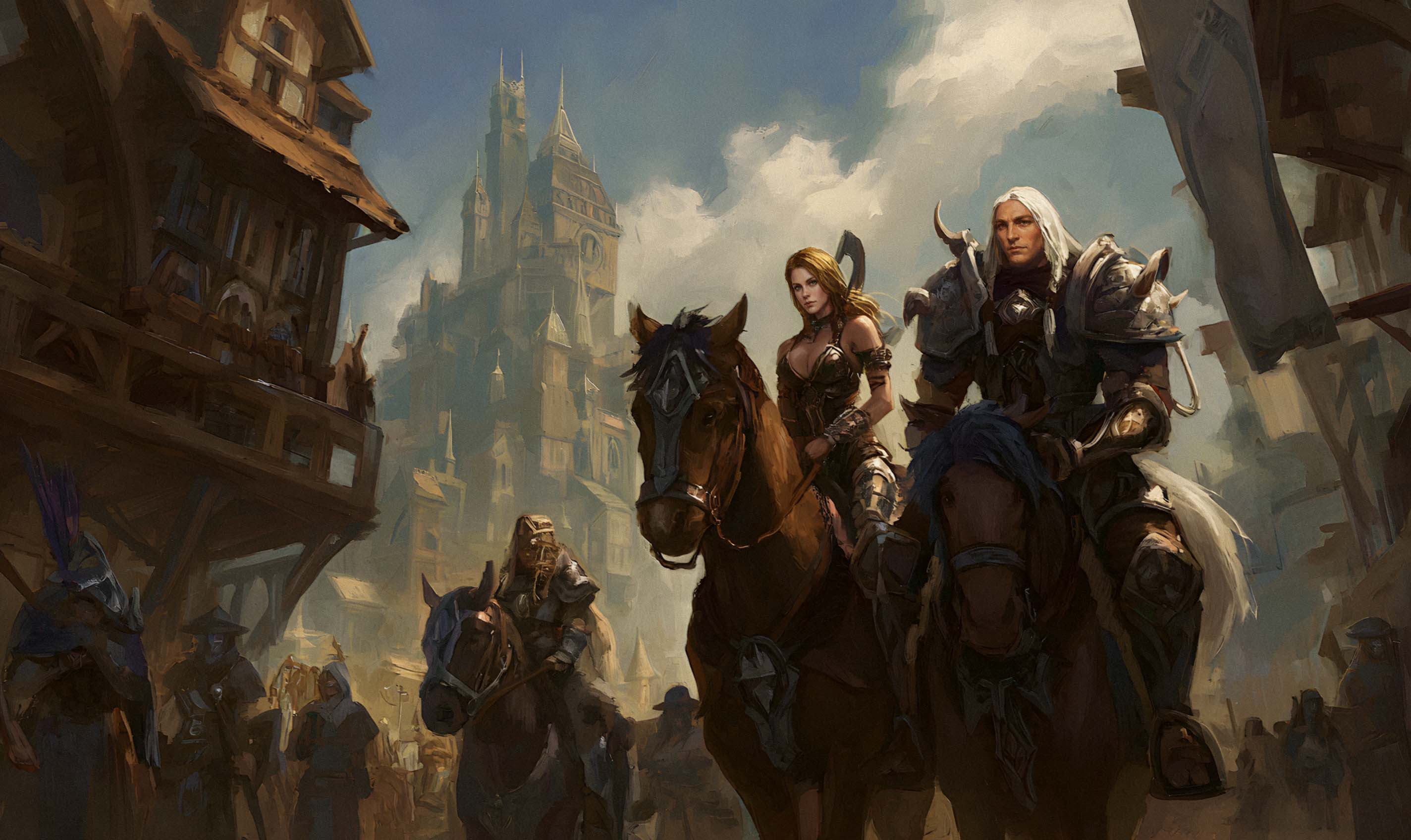
The first children of Order. Physically average but possessing extraordinary willpower and an innate mastery of the Holy Light. When near death, a massive adrenaline surge lets them break stuns, ignore pain, and restore vitality.
5 Strikes · +1 to any two Ability Scores · Choose one Passive and one Active Trait
Adaptive Will Holy Light Affinity Adrenaline Surge
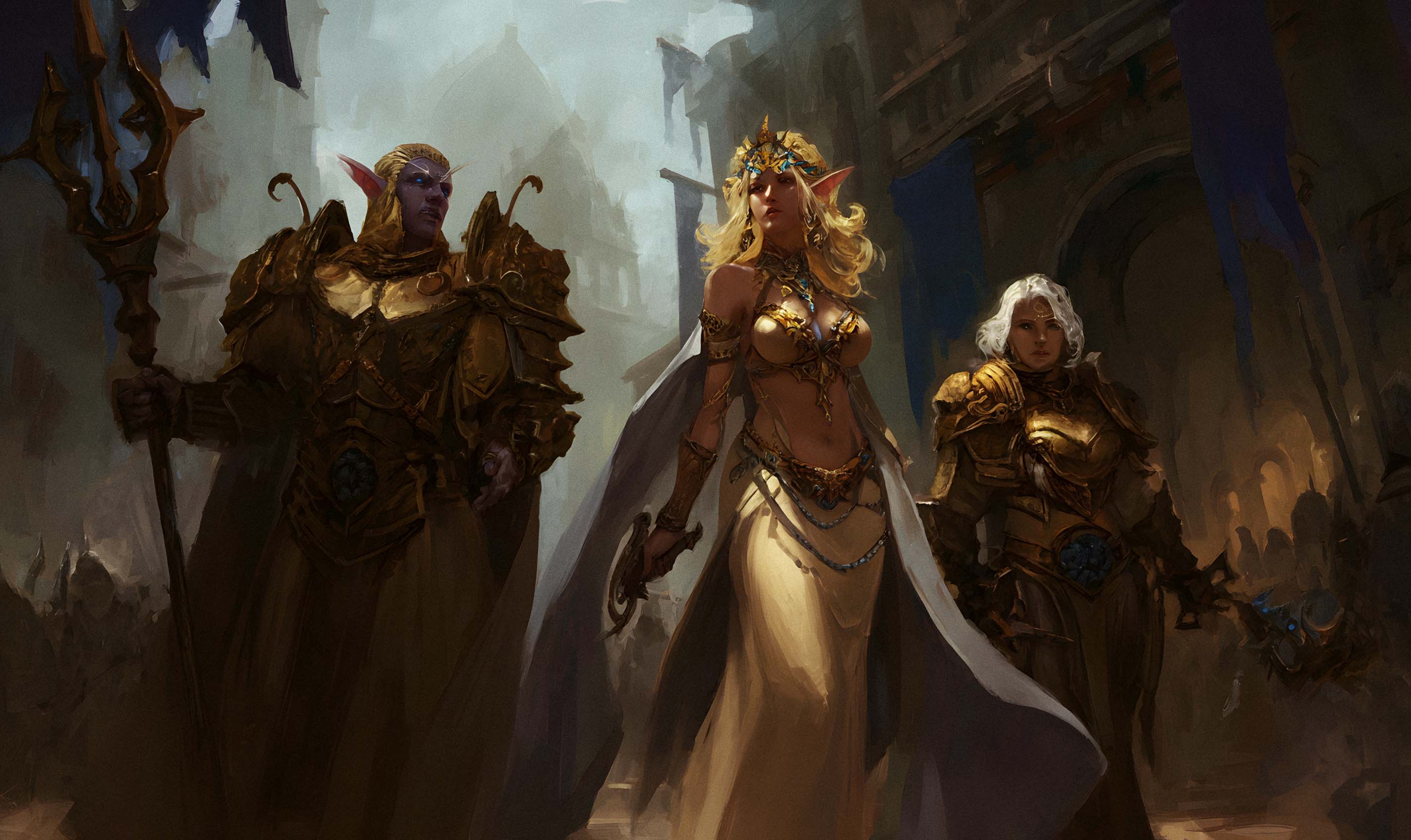
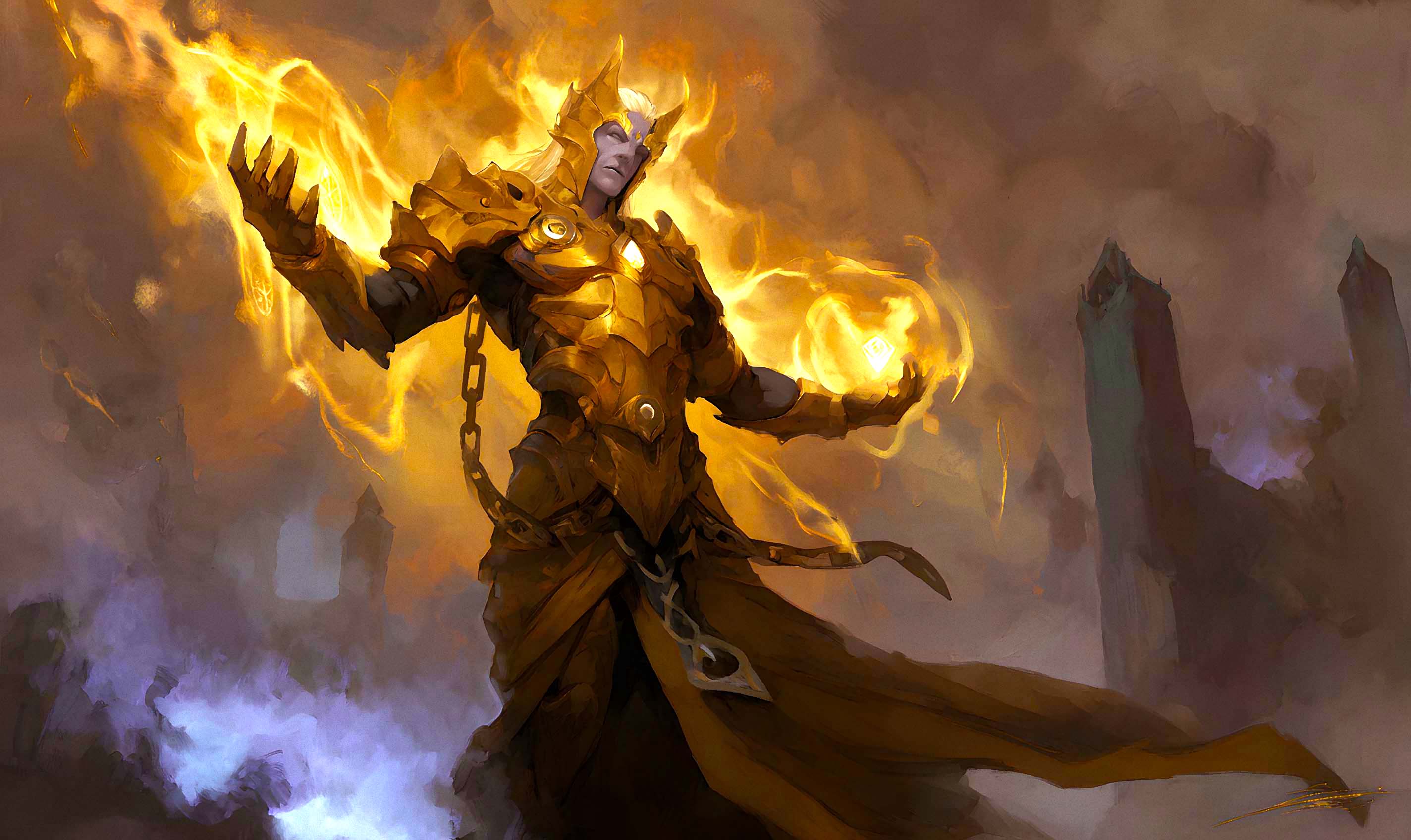
Once Infernal Demons who prayed to the Sun God Thallan and were transformed — their soul-hunger replaced by sustenance from sunlight. Radiant, agile, and fiercely isolationist, they know the enemy better than anyone.
4 Strikes · +2 Finesse, +2 Magick, +1 Insight
Solar Sustenance Demonic Insight Keen-Eyed
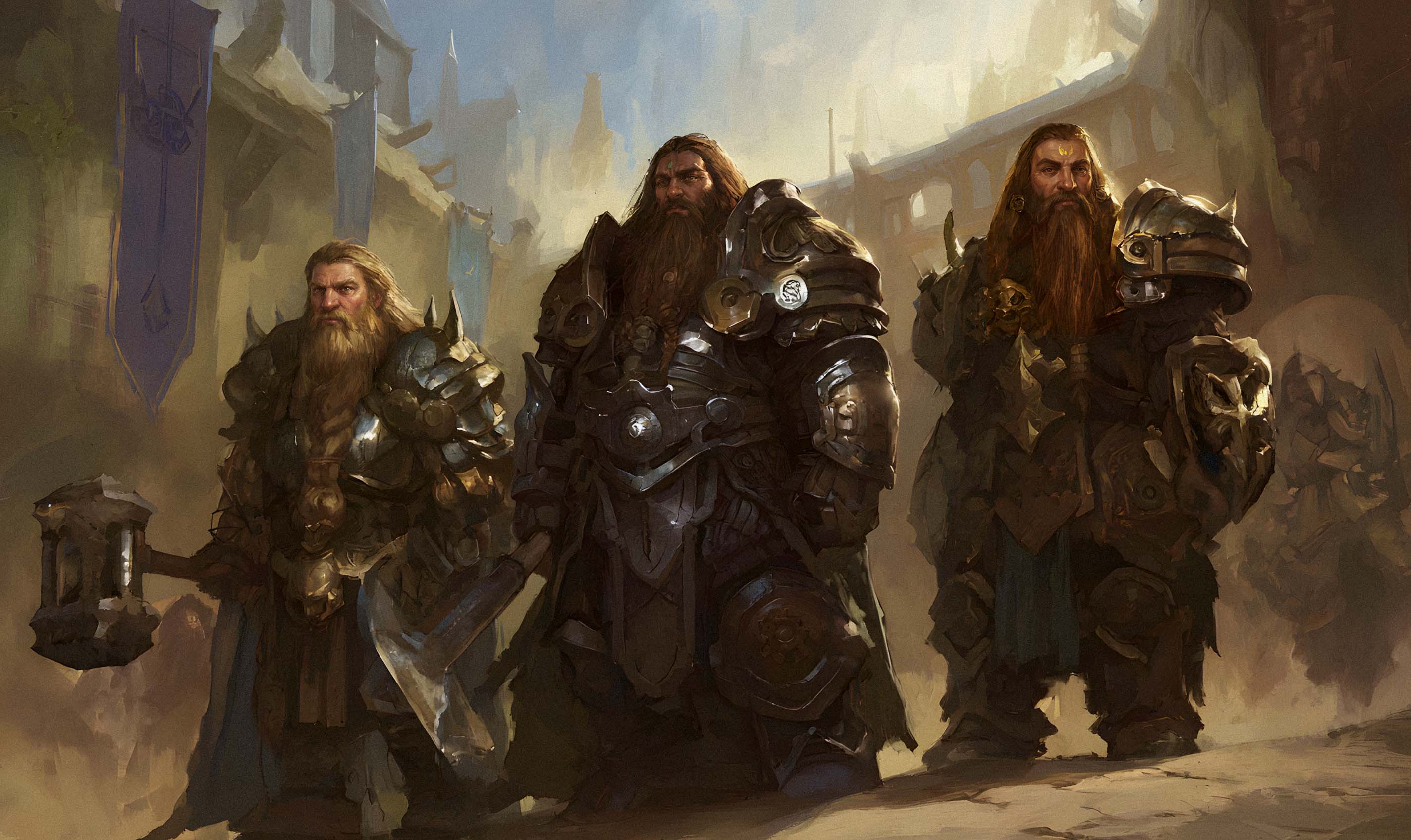
Masters of the subterranean depths with unmatched metallurgical and engineering brilliance. Devout followers of Order, they carry the light of the gods into the darkest veins of the world — and the psychological weight of diaspora and servitude.
6 Strikes · +3 Endurance, +2 Might, +1 Insight
Iron Gut Stonecraft Mastery Darkvision
Massive ursine wildlings with stone-like hides and devastating claws. Deceptively peaceful in domestic life — they adore good food and long sleep — but once enraged, only death can stop them. They heal through deep, restorative hibernation.
7 Strikes · +3 Might, +2 Endurance, +1 Presence
Tenacious Unstoppable Rage Stone Hide
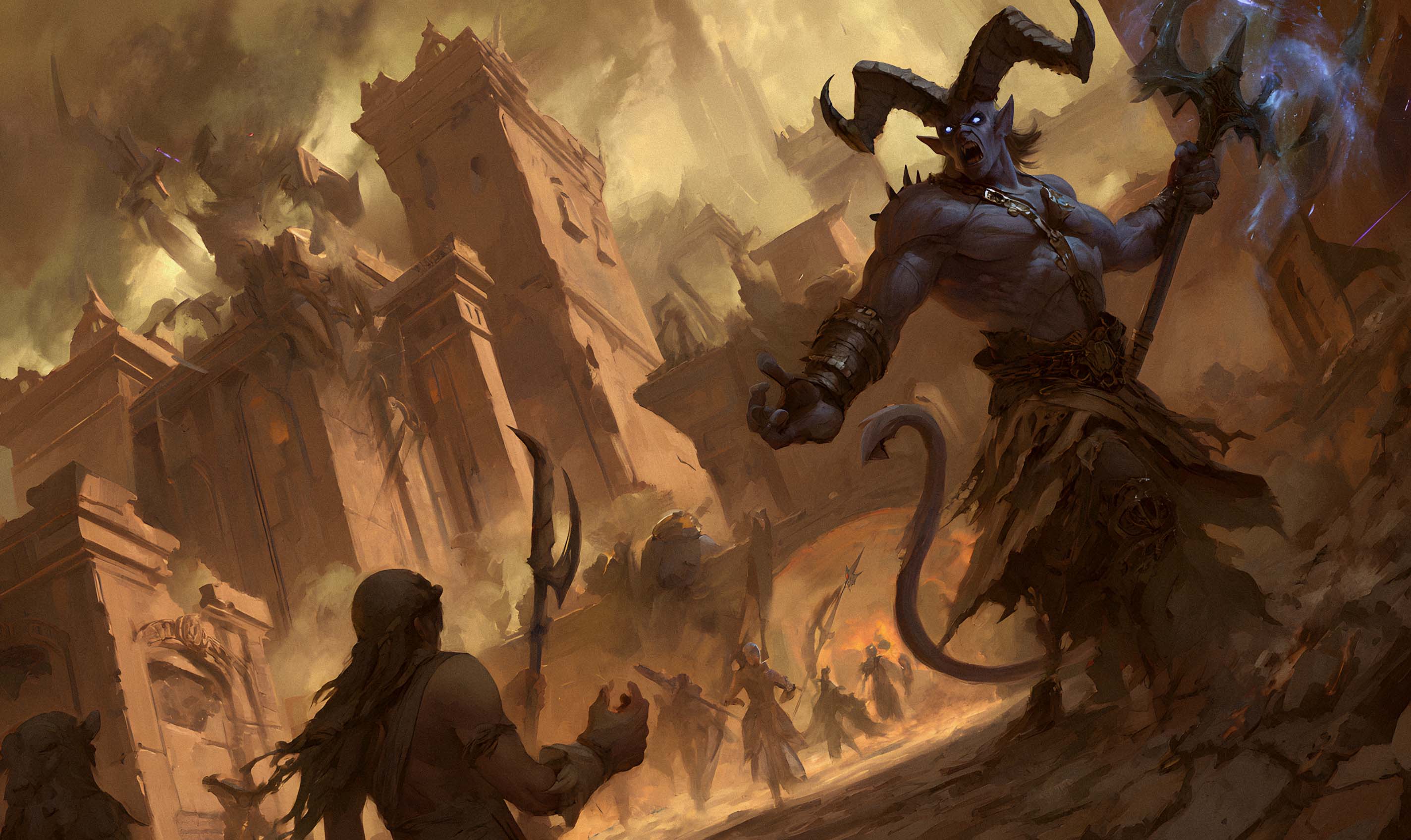
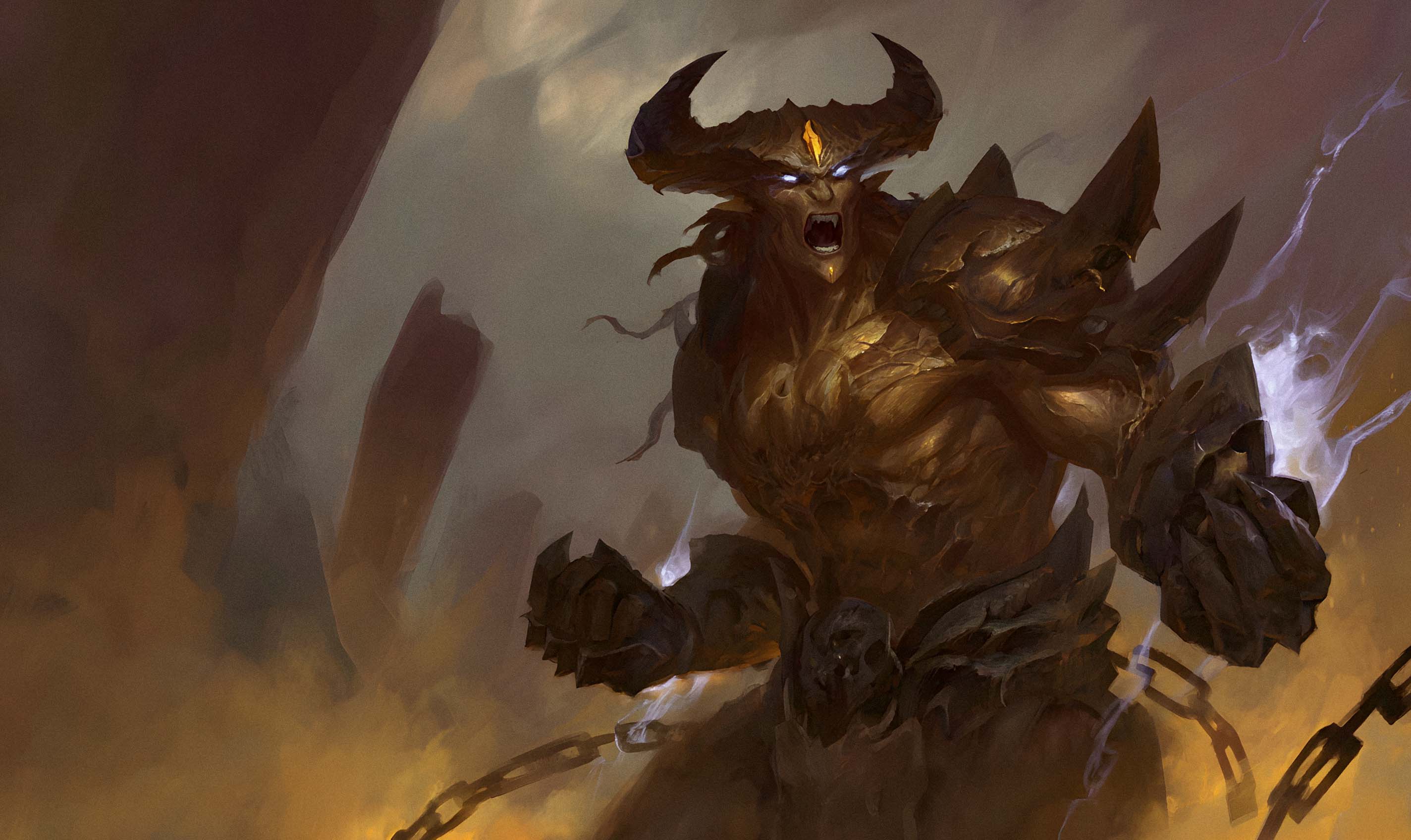
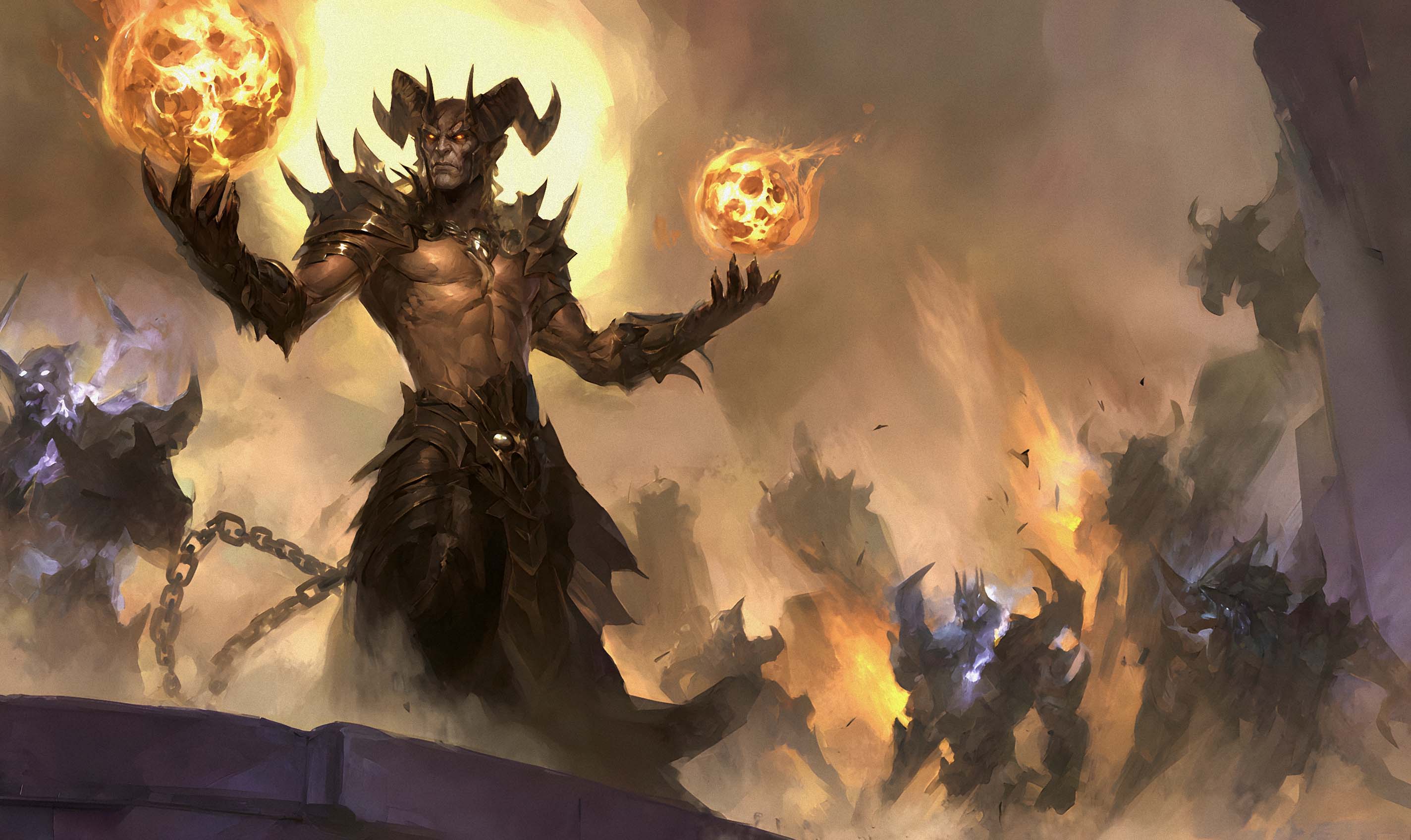
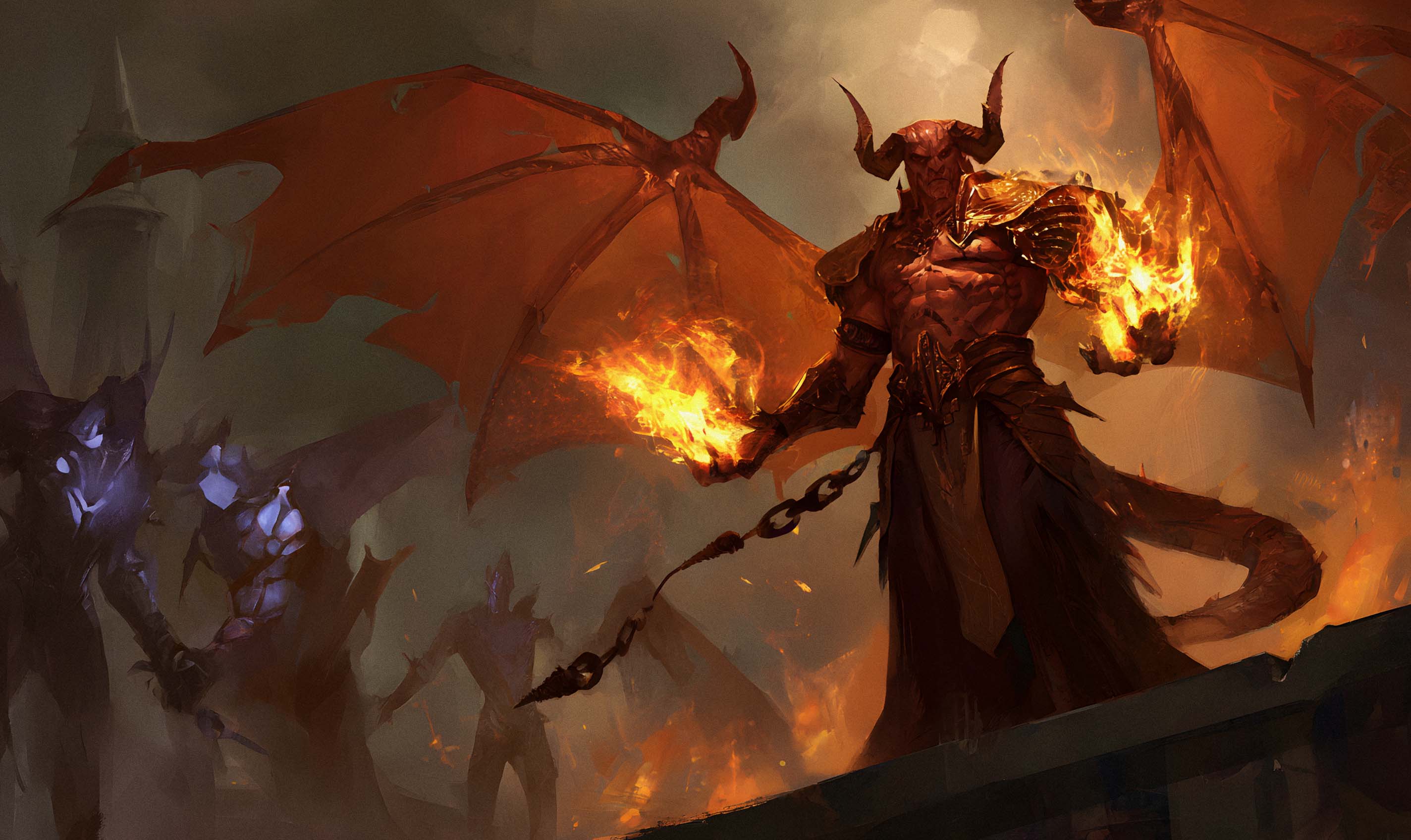
Immortal entities linked to the dark arts and the destruction of life. They wield Infernal Fire to incinerate enemies and cauterize their own wounds. However, they must continuously devour mortal souls to sustain their immortality — a hunger that can never be satiated.
5 Strikes · +3 Magick, +2 Presence, +1 Faith
Infernal Flame Soul Hunger Dark Arts Mastery
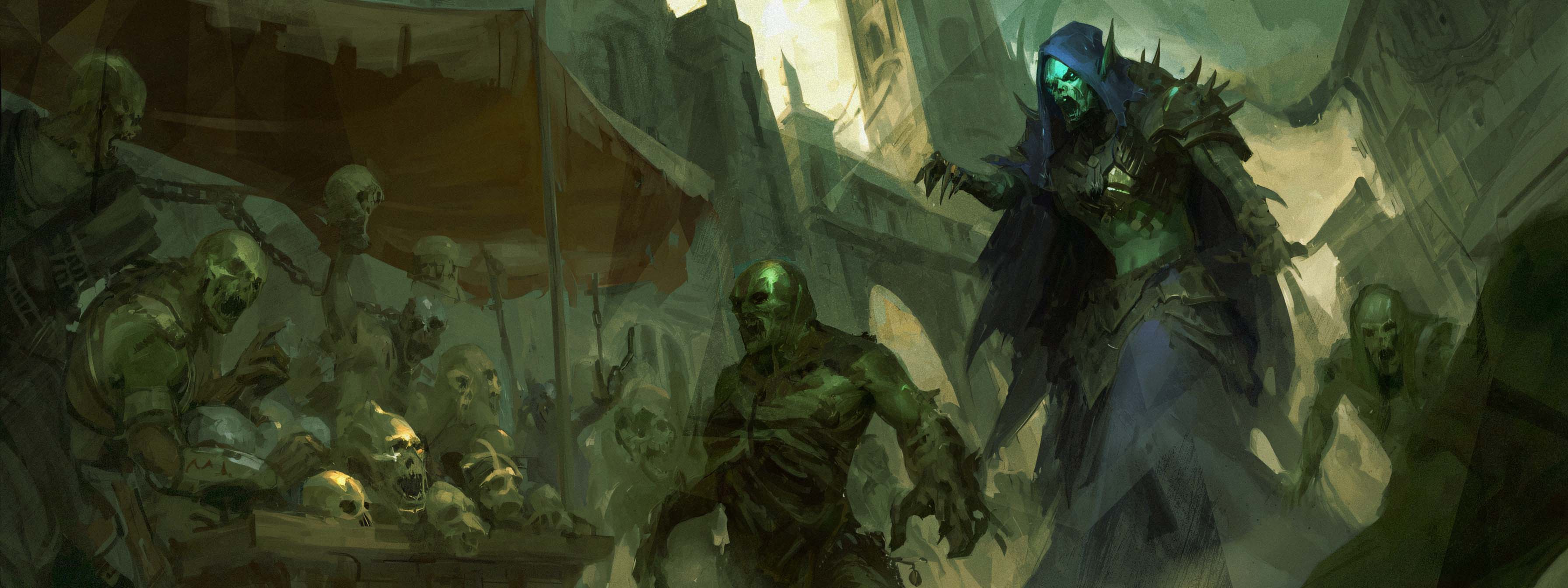
Humans who refused to let their souls be recycled, cursed by the Old Gods to remain bound to their rotting corpses. Biologically immortal yet trapped in perpetual decay, they are driven by cold vengeance against the living societies that shunned them.
5 Strikes · +3 Resolve, +2 Faith, +1 Endurance
Deathless Will Necrotic Resistance Ghosttouched
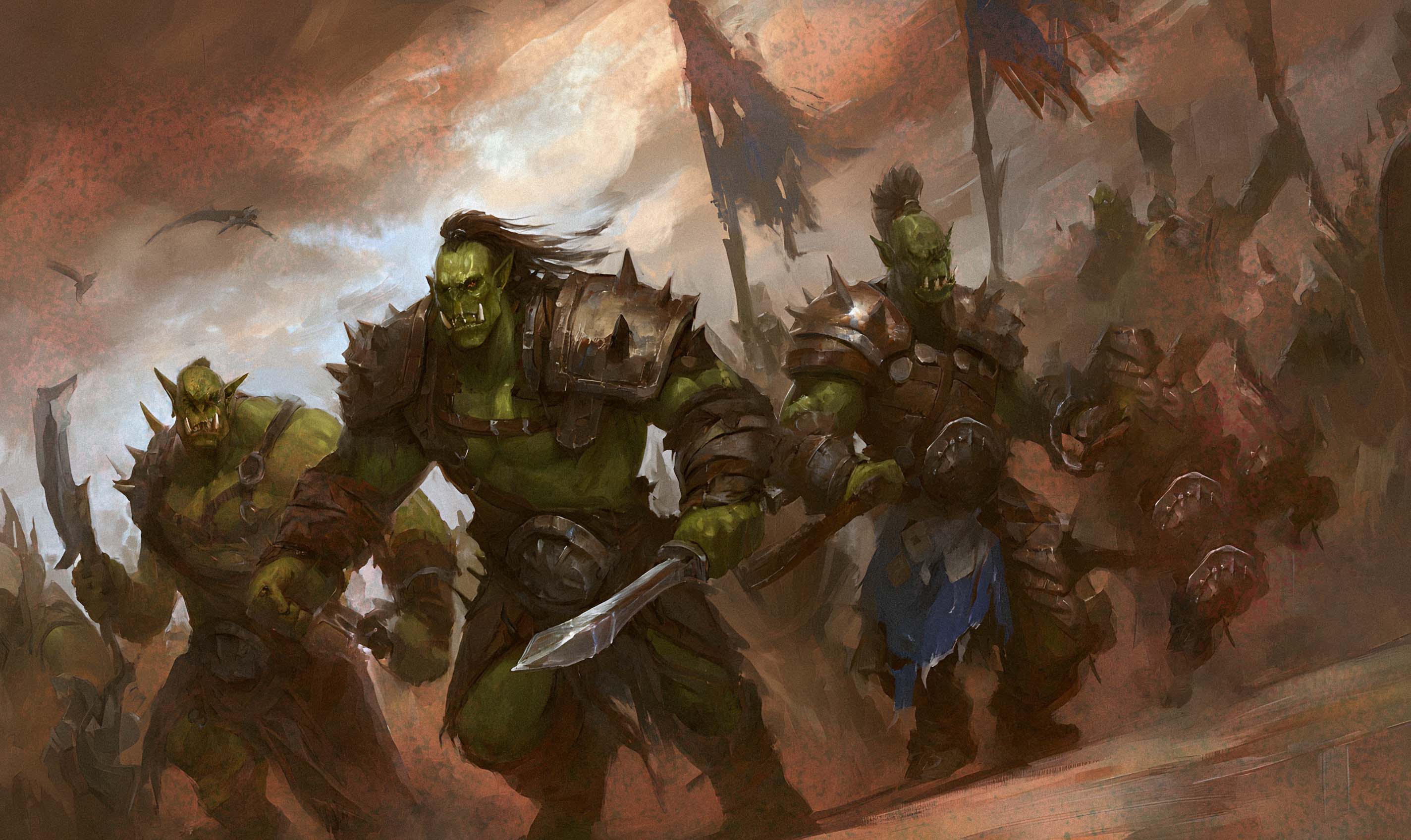
The ultimate biologically engineered war machines — brutal, savage, with immense physical strength and limitless endurance. Their entire culture revolves around combat. A strict, hyper-meritocratic Chieftainate ensures only the strongest lead.
6 Strikes · +4 Might, +1 Endurance, +1 Finesse
Battle-Born Pain Hardened Warlord's Roar
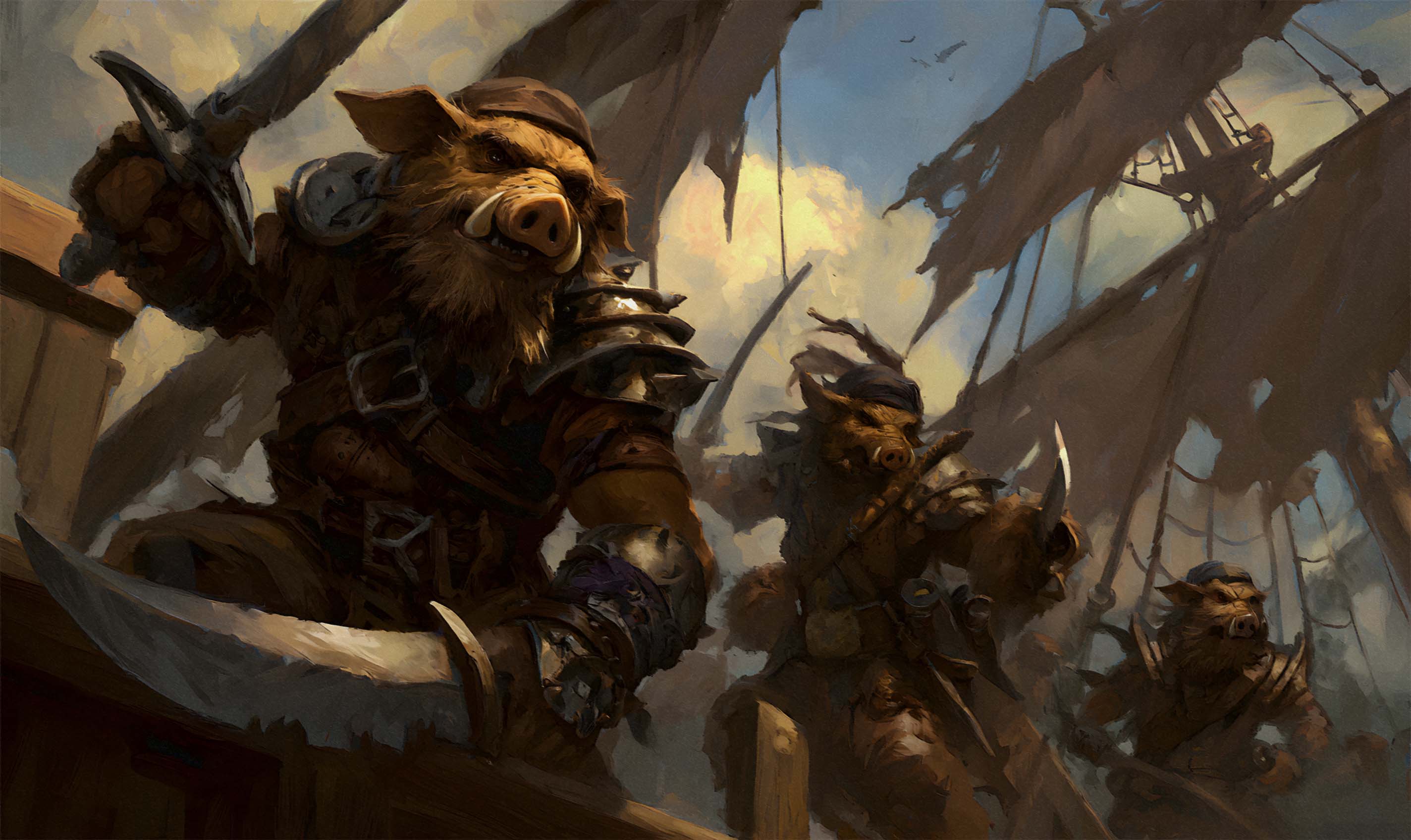
Massive, tusked beings violently awakened by the Quake Mother from the mud of the Machialfi Jungles. Forged in slavery and freed in blood during the Night of the Crimson Leaves, they give no mercy because they were taught the Chaos Gods offer none.
7 Strikes · +3 Endurance, +2 Might, +1 Resolve
Quake Stomp Stalwart Mud-Born Resilience| Race | Faction | Strikes | Ability Bonuses | Key Traits |
|---|---|---|---|---|
| Humans | Order | 5 | +1 to any two | Adaptive Will, Adrenaline Surge |
| Sun Elves | Order | 4 | +2 FIN, +2 MGK, +1 INS | Solar Sustenance, Keen-Eyed |
| Dwarves | Order | 6 | +3 END, +2 MGT, +1 INS | Iron Gut, Darkvision |
| Bearans | Order | 7 | +3 MGT, +2 END, +1 PRS | Tenacious, Stone Hide |
| Infernal Demons | Domination | 5 | +3 MGK, +2 PRS, +1 FTH | Infernal Flame, Soul Hunger |
| Undead | Domination | 5 | +3 RSV, +2 FTH, +1 END | Deathless Will, Ghosttouched |
| Orcs | Domination | 6 | +4 MGT, +1 END, +1 FIN | Battle-Born, Pain Hardened |
| Gronthar | Domination | 7 | +3 END, +2 MGT, +1 RSV | Quake Stomp, Stalwart |
War is the natural state of Aragon. Combat is swift, brutal, and unforgiving.
The Arbiter of Fate chooses one of two initiative systems depending on the encounter. For large-scale battles and ambushes, use Group Initiative: the Arbiter rolls a d6 — on 1–3, enemies act first; on 4–6, the players act first. For smaller, tactical encounters, use Individual Initiative: each character rolls d20 + Insight, with the highest result acting first.
Natural 20: Deal an additional Strike of damage beyond the normal hit. On Irongarth, the gods sometimes guide your blade.
Natural 1: Something horrible happens — the Arbiter interprets the catastrophe. Your sword arm cramps, your bowstring snaps, your spell backfires. The chaos gods are always watching.
Weapon Effects: At the Arbiter's discretion, weapons may trigger special effects on hit — knockdown, bleeding, armor sundering, or burning from Infernal Flame enchantments.
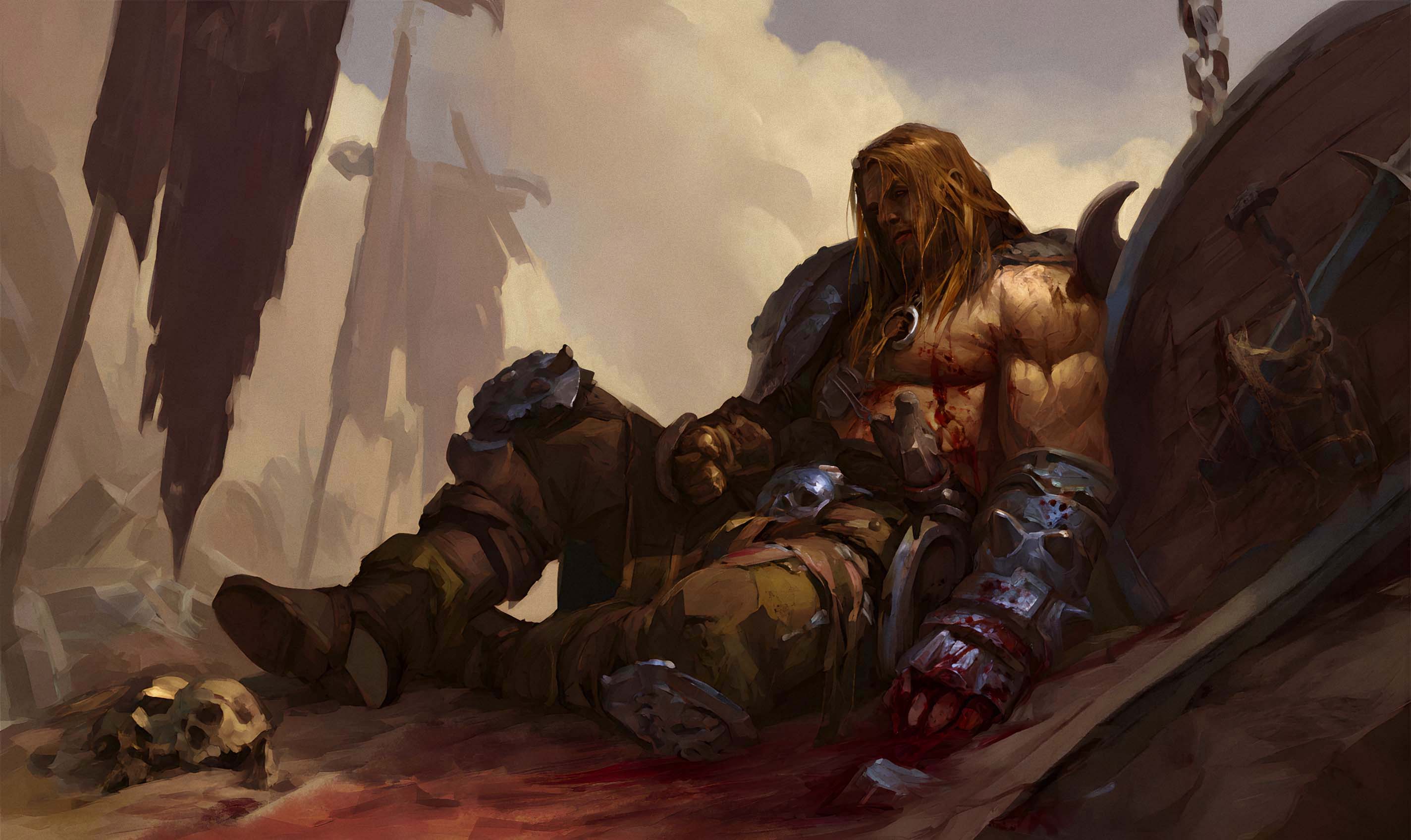
When a character is reduced to 0 Strikes, they don't simply fall unconscious — they suffer a Horrible Wound. Roll 1d12 on the appropriate Horrible Wounds Table based on the damage type that brought them down. Results range from agonizing injuries and permanent maiming to instant, gruesome death.
Undead characters enter a Torpor state instead of rolling on the wounds table — they must be magically restored within 1d4 rounds or be permanently destroyed. A character who survives a Horrible Wound is a prime candidate for a Scar event at the Arbiter's discretion.
Don't go looking for fights — you'll probably just end up dead.
Channel the arcane forces of Aragon or invoke divine wrath — at your peril. Magic is power, and power always demands a price.
When a character casts an arcane spell, they roll d20 + Magick against the spell's DC. The base Spell DC is 10. Armor interferes with the delicate manipulation of arcane energy — wearing armor increases the DC significantly.
Magical Mishap (Natural 1): When you roll a natural 1 on a spellcasting roll, you lose 1 Presence permanently, then roll 1d100 on the Magical Mishap Table. Results range from animals becoming terrified of you, to shadows moving on their own, to tentacles erupting from your face for 5 Strikes of damage. On a 100, madness consumes you — your character becomes an NPC agent of dark forces.
Sacred Order clerics and paladins channel Thallan's Holy Light. Domination warlocks and necromancers tap into the dark well established by Griefthor and the Quake Mother. All divine spellcasters roll d20 + Faith against a base Miracle DC of 12.
The gods of Aragon care nothing for mortal comfort — only for the prosecution of their cosmic war. A prayer to Thallan might be answered, but the answer may arrive as dragonfire that doesn't distinguish friend from foe. A plea to Griefthor always comes with a price paid in souls.
Death occurs quickly and violently on Irongarth. When you reach 0 Strikes, roll on the Horrible Wounds Table and pray to whatever god will listen.
| d12 | Result |
|---|---|
| 1 | Head battered. Knocked senseless. STUNNED. |
| 2–5 | Beaten to a pulp. STUNNED for 1d4 rounds. |
| 6 | Bashed over the head, crying out in agony. SKULL CRACK. |
| 7–8 | Limb broken (roll 1d4: 1=left arm, 2=right arm, 3=left leg, 4=right leg). EXHAUSTED. |
| 9+ | Your head is crushed, your skull explodes. You're dead. |
| d12 | Result |
|---|---|
| 1 | Scream bloody murder. Lose 1d4 fingers. |
| 2–4 | Gush blood, cry. EXHAUSTED. |
| 5 | Limb severed (roll 1d4). LAST GASP. |
| 6–7 | Your artery has been slashed open. ARTERY SLASH. |
| 8+ | The last thing you see is the glint of steel. Your head rolls. Dead. |
| d12 | Result |
|---|---|
| 1–2 | Arrow to the knee. Agonizing pain — maybe take up being a city guard. |
| 3–4 | Arrow to the chest, blood spurts with every breath. LAST GASP. |
| 5–6 | Shot strikes your face — your eye is destroyed. LAST GASP. |
| 7+ | The last thing going through your head is an arrow. Dead. |
| d12 | Result |
|---|---|
| 1–2 | Claws rake across your chest. BLEEDING WOUND. |
| 3 | Throat bitten, bleeding out fast. Mute. ARTERY SLASH. |
| 4–6 | Eviscerated by demonic fury. LAST GASP. |
| 7+ | Claws and fangs rip your head from your body. Dead. |
Afflictions that plague the warriors of Irongarth. The battlefield does not merely kill — it maims, poisons, burns, and breaks the spirit.
The defining mechanic of Chronicles of Aragon. Advancement is not earned through abstract experience points — it is burned into your flesh, paid for in coin, and forged through legendary deeds.
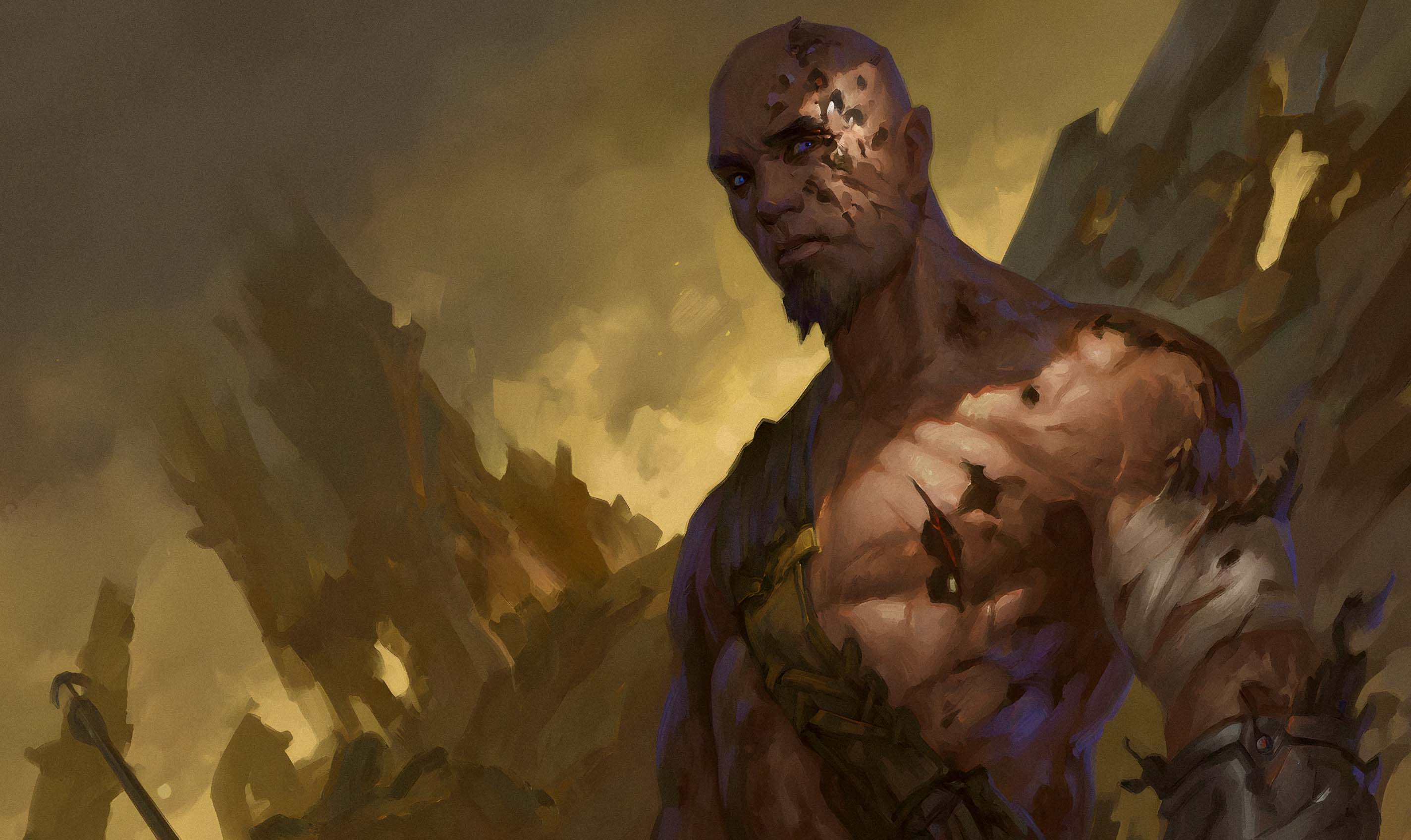
In Aragon, physical trauma is a highly venerated marker of honor, perseverance, and legendary achievement. Scars are earned through progression and interaction with the harsh world itself, fundamentally altering a character's physical abilities and playstyle.
Two characters with identical starting builds will diverge dramatically based on the permanent Scars they acquire. This creates a global culture that rewards survivability and views physical damage as a canvas of powerful, personal narrative identity.
A Scar is earned whenever a character survives a Horrible Wound, completes a major story milestone, clears an Evershifting Dungeon, or defeats a legendary foe. Character advancement isn't a traditional leveling system — it is earned through exploring the world, finding treasures, earning coin, purchasing training, and surviving the worst Irongarth can throw at you.
When a Scar event is triggered, the player rolls on the Scar Table (d100). The result determines the type of Scar gained — each carrying a permanent mechanical bonus (a new trait, an ability score increase, or a unique power) and a corresponding narrative consequence. Some Scars grant raw power at the cost of social standing; others unlock abilities but impose physical limitations. Over the course of a campaign, a character's accumulated Scars and trained abilities make them wholly unique — no two adventurers in Aragon are alike.
Branded by Infernal Flame (01–08): +2 to Endurance saves against fire. −1 Presence when dealing with Sacred Order NPCs. Flesh is permanently blackened.
Shattered Shield Arm (09–16): Cannot use heavy shields. +1 Finesse (the body compensates). A visible, jagged break line runs from elbow to shoulder.
Eye of the Depths (17–24): Gained from surviving a Dwarven mine collapse. Grants darkvision 60ft. One eye is clouded, milky white. +1 maximum Strike.
Soul-Touched (25–32): Survived proximity to the Soul Ring's residual energy. +2 Resolve. Nightmares prevent natural rest — must use magical restoration or spend double resting time.
Born from the magical fallout of the Soul Ring, these procedural anomalies are Aragon's most dangerous and rewarding environments.
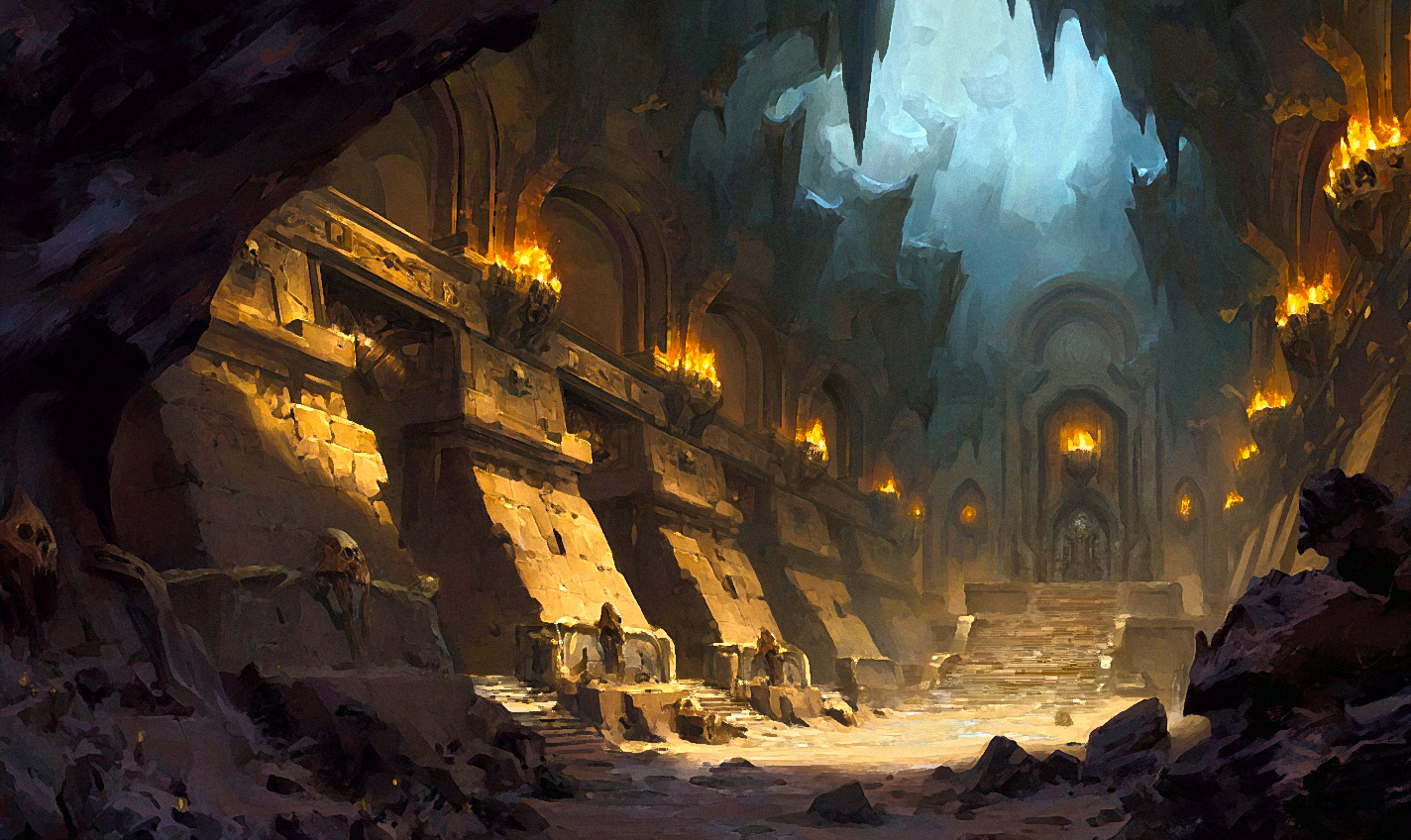
The environmental instability left by the Soul Ring cataclysm manifests as Evershifting Dungeons — subterranean environments with dynamic layouts, shifting encounters, and fluctuating physical modifiers. They are not static architectural constructs but procedural anomalies that evolve with each incursion.
No two delves into the same dungeon are identical. Passages rearrange, traps relocate, and the creatures within adapt. This requires parties to rely on adaptability and tactical mastery rather than memorized routes.
When the party enters an Evershifting Dungeon, the Arbiter rolls on the Shift Table to determine the dungeon's current configuration. Each room or corridor is generated procedurally using a combination of d6 rolls for layout, d8 rolls for encounter type, and d12 rolls for environmental modifiers.
Environmental modifiers (d12) add conditions like magical darkness, gravitational anomalies, pools of residual Soul Ring energy, or temporal distortions that age or rejuvenate characters. These modifiers stack across rooms, making deeper delves exponentially more dangerous — and exponentially more rewarding.
Evershifting Dungeons are the primary source of magical equipment, rare crafting materials for Dwarven artisans, coin for training, and — most importantly — Scar events. The deeper a party ventures, the higher the probability of encountering a Horrible Wound trigger or Scar-granting moment.
The Arbiter should treat each dungeon delve as a self-contained episode of escalating tension. Early rooms test the party's Strikes and resources. Middle rooms force difficult tactical decisions. The deepest chamber should present a genuine threat of total party death — and the most significant rewards Aragon has to offer.
The gods of Aragon are not abstract concepts. They intervene, they create, they destroy. Understanding them is essential for any campaign.
Unlike many settings where deities operate at a remove, the gods of Aragon are historically documented agents whose interventions have reshaped continents, created entire species, and triggered extinction-level cataclysms. The pantheon is explicitly divided into the Gods of Order and the Gods of Chaos, and this schism drives every faction conflict, racial ability, and divine spell in the game.
Player characters do not simply "worship" a deity — they exist because of one. Every racial blessing and curse traces directly back to a specific divine decision. The Arbiter should treat the gods as active, unpredictable narrative forces: distant enough that players cannot rely on them, but present enough that their influence is felt in every corrupted ruin, every holy ward, and every soul-hungry demon the party encounters.
The most prominent and historically active God of Order. Thallan directly aided in the construction of the Great Human Empire and serves as the primary divine patron for all races of the Sacred Order. He is a god of radiant, life-giving light — but his nature is inherently militant. For his followers, peace is maintained through overwhelming, righteous force.
Uniquely, Thallan possesses a physical avatar on the mortal plane: the legendary Fire Dragon, Silargilion. It was in this form that he directly battled the Demon King during the Soul Ring cataclysm, abandoning all proxy rules in a desperate bid to save his mortal champions.
Thallan's divine grace also proved capable of altering fundamental biology — answering the prayers of defecting Infernal Demons and transforming them into the Sun Elves, establishing a precedent that the Gods of Order value redemption as a tool of cosmic warfare.
The chief architect of the demonic forces, Griefthor operated with brilliant, cruel pragmatism. He taught the Infernal Demons the forbidden arts of Dark Magic and bestowed upon them their defining traits: absolute immortality and mastery of Infernal Flame — intrinsically coupled with the horrific curse of eternal soul-hunger.
Griefthor's ultimate strategy was to weaponize this biological hunger, forcing the Demons to annihilate humanity not out of ideology, but simply to sustain their own agonizing existence. Every Demon that feeds does so because Griefthor designed them to have no other choice.
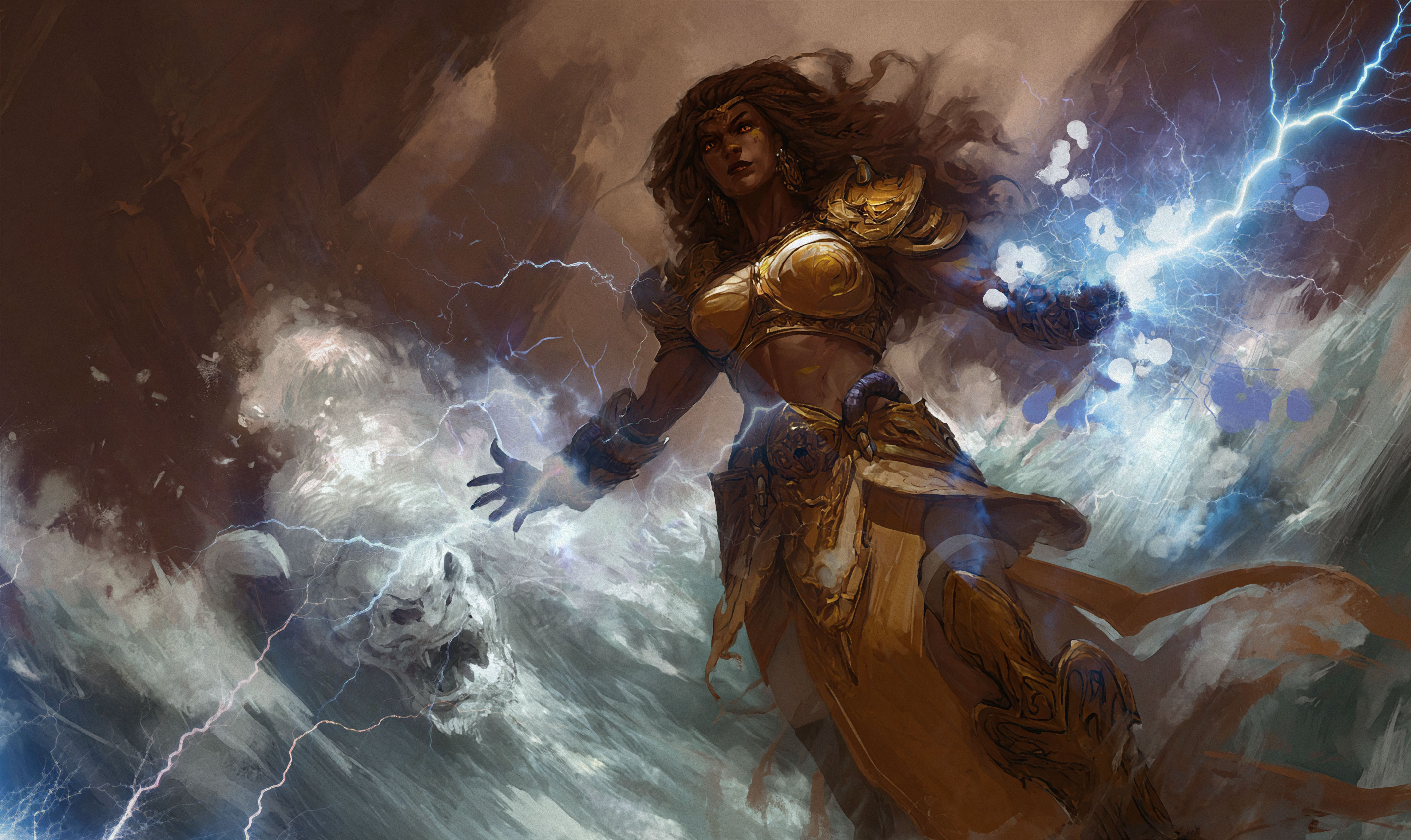
A fierce, elemental goddess of earth-shattering natural disasters and primal violence. According to Gronthar mythology, she literally stomped across the lands, split the sky with a lightning dagger, and violently merged sea, river, and land in a muddy downpour to awaken her children directly from the mud of the Machialfi Jungles — granting them immediate wits, wisdom, and memory.
Her teachings are brutal and absolute: mercy is a fatal, pathetic flaw in a universe governed by Chaos. This philosophy is embedded in every Gronthar born since — they expect no mercy and they give none.
In Chronicles of Aragon, divine magic is not abstract — it is a direct channel to beings who have historically leveled continents. Sacred Order clerics and paladins draw power through Faith-based miracles fueled by Thallan's solar mandate. Domination warlocks and necromancers tap into Griefthor's dark well through Magick-based spellcasting. The Arbiter should decide early in a campaign how present the gods will be: are they distant patrons granting power through faith alone, or are they active agents whose avatars might appear in the climactic moments of a story arc?
The divine pact — which forbids gods from directly cursing rival creations — remains a useful narrative constraint. It means divine intervention always comes with limitations, loopholes, and unintended consequences. A prayer to Thallan might be answered, but the answer may arrive as dragonfire that doesn't distinguish friend from foe.
Historical and contemporary figures whose decisions forged — and shattered — the civilizations of Aragon. Use them as NPCs, quest-givers, patron saints, or cautionary tales.
These figures can serve multiple narrative roles depending on your campaign's timeline. Set your story during the First Epoch and they are active rulers and generals. Set it in the post-cataclysm era of Irongarth and they become legends whose names adorn fortifications, whose statues stand in city squares, and whose mistakes still haunt the living. Some — like the Undead Queen Nepherimas — are immortal, and may appear in any era as active antagonists or reluctant allies.
Founder of the First Kingdom and the original capital of Whitestone in Mynorath's sacred White Garden. His laws and faith laid the foundation for all human civilization.
Orchestrated the massive human evacuation to Irongarth after the Cataclysm. Founded Whitesong City and laid the ideological, political, and military foundations of the Sacred Order.
Made the agonizing decision to lead surviving Dwarven clans into human servitude to prevent total racial extinction at the hands of the Orcs. A tragic, deeply controversial figure whose sacrifice preserved his people's bloodlines.
The wise, exceptionally strong leader of the Bearans. His profound diplomatic acumen earned him a permanent seat on the High Council of the Sacred Order, respected by Humans, Dwarves, and Elves alike.
An ancient figure of immense, legendary renown. Namesake of major fortifications including On's Gate and Onas Fall in Irongarth — blood-soaked regions that still bear witness to ancient battles.
A contemporary figure of economic significance who operates the Mythical Mounts Emporium within human settlements — representing the civilian commercial infrastructure of the Sacred Order.
Brilliantly orchestrated the plague-assault that conquered Whitestone, renaming it Gravestone. Rules the Dead Swamps with an iron fist. Immortal and still active — a potential campaign antagonist or uneasy ally.
Founded the demonic kingdom in the Dark Desert of Grommdor. Chief architect of the Soul Ring and instigator of the global cataclysm. His ambition to rival the Old Gods nearly destroyed all life on Aragon.
A highly pragmatic and brilliant military commander. Officially acknowledged the Undead as a sovereign living race, securing their entry into the Domination's military apparatus — a decision that reshaped the faction's power structure.
Orchestrated the Night of the Crimson Leaves — the massive, bloody slave revolt that shattered human chains and permanently secured Gronthar independence. Revered as a liberator-god among his people.
A character's name in Aragon is not merely a label — it is a cultural fingerprint encoding their race's history, values, and trauma. Use these guidelines to name your character authentically.
Each race in Aragon developed distinct linguistic traditions shaped by their divine origins, historical circumstances, and cultural priorities. These naming conventions serve as immediate social identifiers — an Orc's name can be shouted across a battlefield, a Dwarf's name broadcasts their clan wealth, and a Sun Elf's name deliberately erases every trace of their demonic past. When creating a character, selecting a name that follows these conventions will instantly ground them in the world.
First names are regal and rolling, drawn from an Anglo-Saxon linguistic tradition that evokes nobility. Surnames are highly literal, combining geographical, architectural, or occupational nouns — reflecting a culture obsessed with territory, legacy, and tangible contribution to the empire.
Human names broadcast lineage and land ownership. A surname tells you where a family built, what they crafted, and what they claimed.
Highly polysyllabic names frequently ending in soft sibilant sounds. The Undead completely reject their former human identities and biological families. They adopt ancient, dynastic-sounding singular monikers — no surnames — aligning themselves with eternal, unchanging rulership and the permanence of the tomb.
An Undead name should sound ancient, regal, and cold. Every syllable rejects the mortal life they left behind.
Names feature harsh, guttural consonants mixed with hard 'r' and 'y' sounds. Surnames are non-existent — titles denote power. The language of demons is designed to sound hostile, ancient, and abrasive to mortal ears, evoking the crackling of infernal fire and the harshness of the Dark Desert.
A demonic name should feel uncomfortable to speak aloud — angular, aggressive, and dripping with predatory intent.
Soft vowels, flowing syllables, and celestial imagery define Sun Elf nomenclature. Having violently fled their demonic origins, the Sun Elves adopted an entirely new, constructed linguistic identity. Their names deliberately emphasize light, stars, and grace — phonetically distancing themselves as far as possible from the harsh, guttural sounds of their Infernal Demon ancestors.
A Sun Elf name should sound like music compared to the demonic tongue they abandoned.
Names combine Germanic and Nordic phonetic influence with highly literal descriptors of physical traits, precious geological materials, or clan affiliation. Dwarven society is built upon metallurgy, deep mining, and strict clan identity — their names serve as immediate social and economic identifiers of vast wealth, physical robustness, and religious connection to the earth.
A Dwarf's name is a business card, a family crest, and a geological survey all in one.
Short, blunt, guttural closed syllables featuring heavy consonant clusters. Orcish naming conventions prioritize absolute efficiency, aggression, and battlefield intimidation. In a society where worth is measured solely in combat, names must be easily shouted across a chaotic battlefield and must sound inherently forceful and uncompromising.
If you can't bellow the name while swinging an axe, it's not an Orcish name.
Names blend ursine etymological roots with Latinate or soft Sylvan phonetic sounds. The Bearans gained the power of complex speech much later in their evolution through peaceful interaction with humans — so their naming conventions merge their fundamental naturalistic identity (bears) with the pleasing phonetic patterns they observed in early human speech.
A Bearan name should feel warm, round, and grounded — like the creatures themselves.
Names are heavily reliant on literal, violent nouns, elemental forces, or natural disasters. Because the Gronthar were rapidly awakened to consciousness and immediately thrust into brutal slavery, their linguistic development is highly literal and traumatized. They name themselves after the physical actions, concepts, and forces they most respect or fear — bypassing abstract phonetic traditions entirely for blunt truth.
A Gronthar name is not poetry. It is a statement of intent.
"Tell me your name and I will tell you your god, your shame, and where your bones will rest."
— Gronthar proverb, recorded at the Battle of Onas FallThree continents, dozens of key locations, and a world scarred by apocalypse. Use these locations to build your campaign map.
Mynorath — Once the prosperous cradle of Order, a lush and vibrant continent that fostered early human kingdoms, Dwarven depth-empires, and agricultural advancement. Now largely devastated by the Soul Ring cataclysm and magical radiation.
Grommdor — A cursed, deadly expanse where all evil originally resided. The forces of Chaos established their terrifying domains in its arid wastelands. Home to the fallen demonic capital of Blazesand.
Irongarth — The Western Frontier. Once pristine and resource-rich, it is now the primary blood-soaked theater of war between the Sacred Order and the Domination. All modern campaigns are set here.
The resplendent capital of the Sacred Order, founded by King Venuin Stonehill deep within the defensible terrain of the Storms Valley. The political, religious, and military heart of the alliance.
Sacred Order
The radiant, harmonious capital of the Sun Elves, built within the richest and most vibrant forests of Irongarth. Its very name — "Star Light" — embodies the Elves' rejection of their demonic past.
Sacred Order
The grim, highly fortified capital of the Undead on Irongarth. From here, Queen Nepherimas commands her deathless legions — a city of gothic spires, necropolis-architecture, and perpetual shadow.
The Domination
The highly fortified human starting zone on Irongarth — the first beachhead established during the Great Exodus. A windswept coastal settlement that marks where humanity's second chapter began.
Sacred Order
A legendary fortification named after the ancient commander On, explicitly designed to hold back the relentless undead tide. One of the most blood-soaked strategic chokepoints on Irongarth.
Contested
A highly contested, blood-soaked region in Irongarth named for the same legendary commander. A place where armies have clashed for generations and the soil itself is said to remember the dead.
Contested
The original majestic human capital on Mynorath, conquered by Queen Nepherimas's plague-assault and aggressively renamed. The surrounding White Garden was corrupted into the pestilent Dead Swamps.
Ruins · Mynorath
The sprawling capital of the first Demon Lord, King Satanyr, in the arid Dark Desert of Grommdor. Devastated by the magical backlash of the Soul Ring. Now a heat-blasted ruin pulsing with residual dark energy.
Ruins · Grommdor
The dense, humid birthplace of the Gronthar — where the Quake Mother split the earth and sky to awaken her children from the mud. A primal wilderness, now largely depopulated after the Gronthar were taken as slaves.
Abandoned · Mynorath
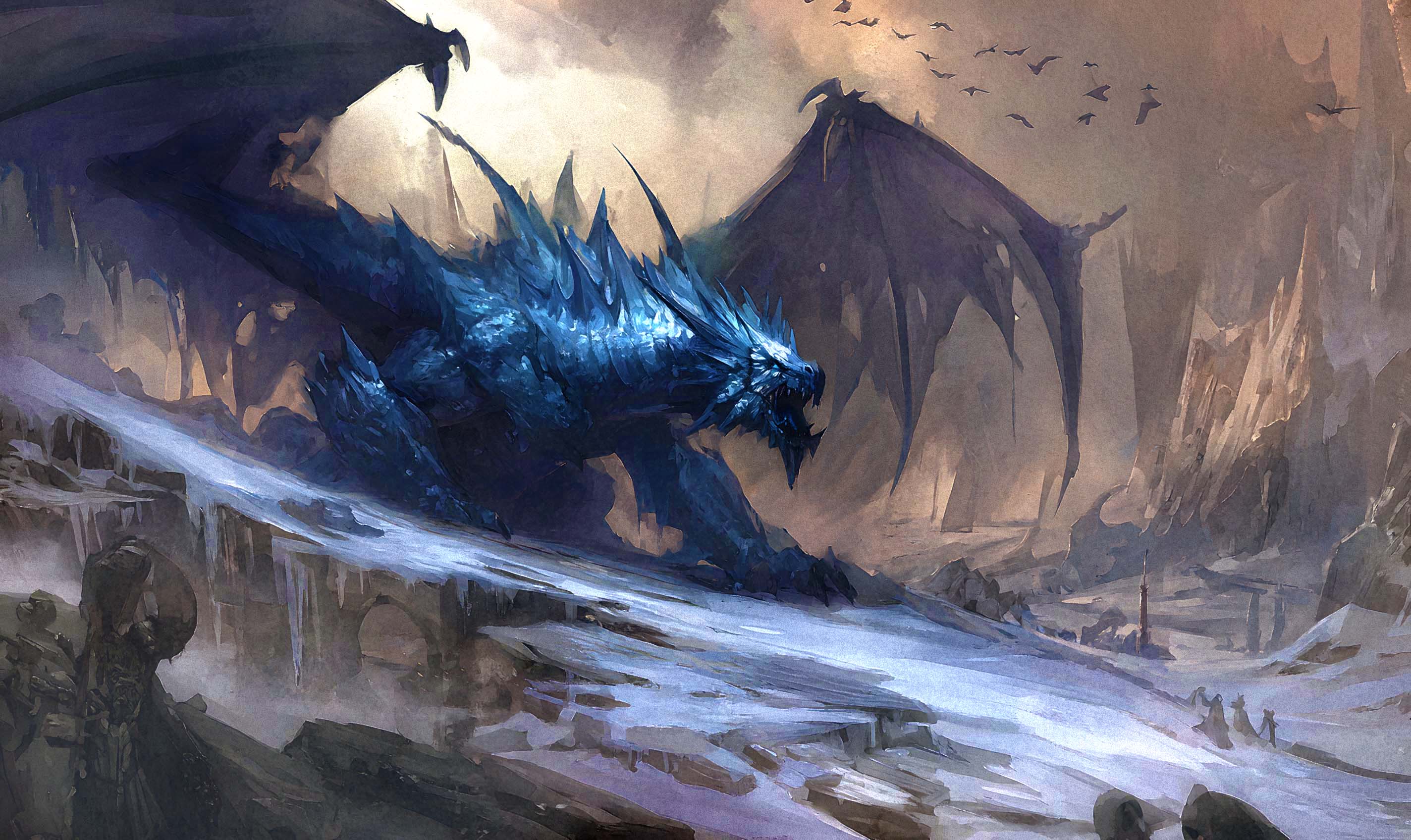
In the frozen reaches of northern Irongarth, an ancient, primordial force stirs. An Ice Dragon — a being that predates even the proxy war — slumbers beneath the glacial wastes. Its mere existence threatens to completely destabilize the fragile ecological and geopolitical balance of the entire world.
The Arbiter may use the Ice Dragon as an apocalyptic-scale campaign threat — a force so overwhelming that it could compel the Sacred Order and the Domination into an uneasy, temporary alliance. Or it could serve as the ultimate dungeon: a frozen lair where the party must venture deeper than anyone has survived, and where the most legendary Scars of all are earned.
"Every stone on Irongarth is soaked in the blood of someone's ancestor. You don't claim land here. You earn it. You defend it. Or you become part of it."
— Dwarven surveyor's inscription, Goldbeard PeakGather your party, choose your faction, and step into Irongarth. Every scar you earn is a chapter in your legend.